The latest Masters TV ratings have come with a twist. Here is the reason

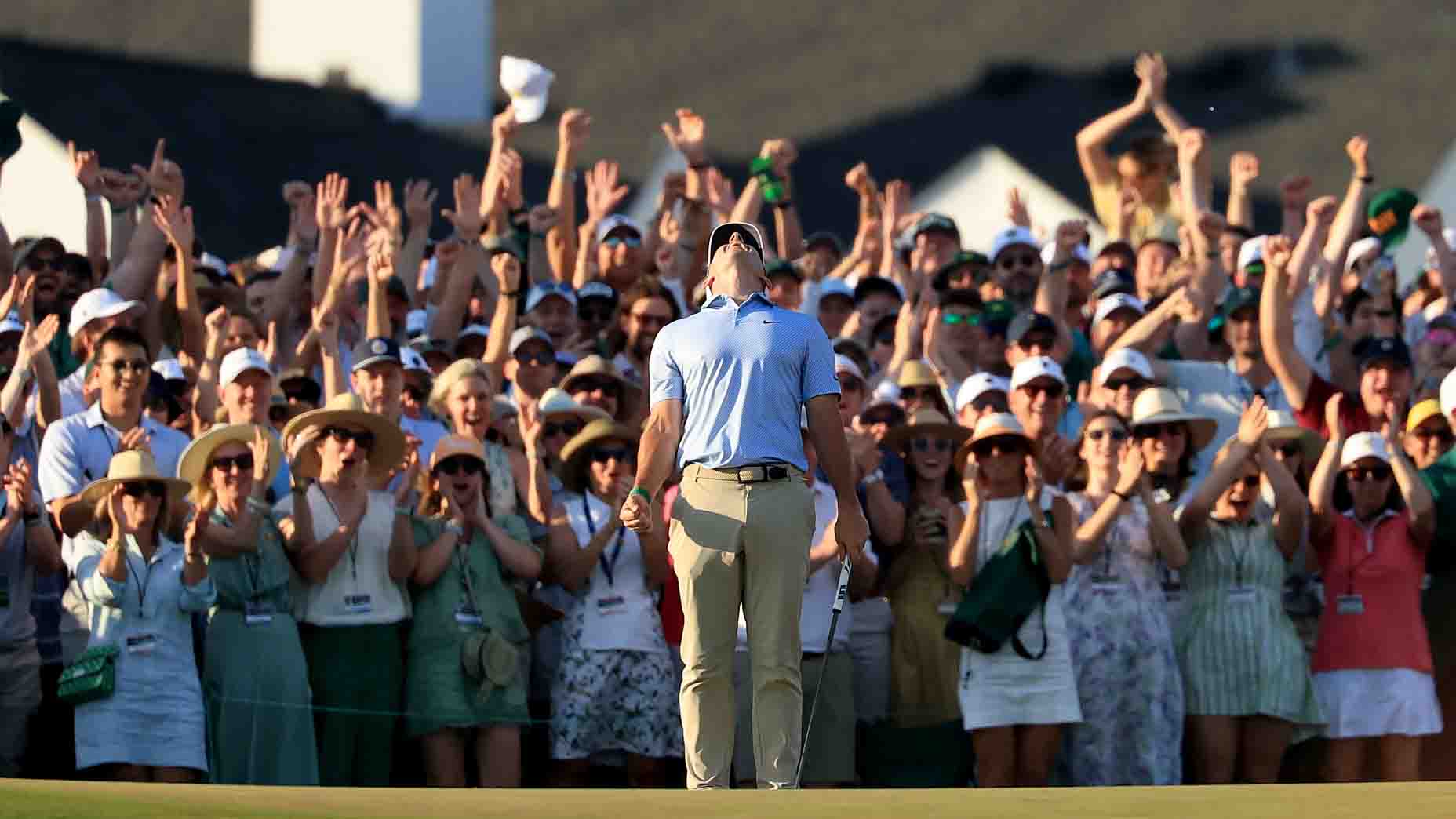
Comparisons can be the thief of joy, but if you were lucky enough to be in the gallery the last two Sundays of the Masters, it was only natural to spend time slowly while checking for similarities.
For each of the last two Sundays at the Masters, Rory McIlroy has stepped off the first tee at the center of gravity of golf’s biggest event. For each of the last two Sundays at the Masters, he has endured a final round that was equal parts epic highs and epic doom. And, on each of the last two Sundays at the Masters, McIlroy has finished 18thth blue at the top of the pack, he enjoyed the emotional walk to the scorer’s tent, took the boat to the Butler Cabin, and put his shoulders in the green jacket.
And yet, for all their core similarities, i the difference between McIlroy’s two wins was even more impressive. The crowds on Masters Sunday seemed happy but not happy at all. The winner of this Sunday’s Masters appeared bitter but not completely victorious. And the big impact of winning this Sunday’s Masters seemed respectable but not worldly.
In almost every way, this was completely understandable. Rory McIlroy can end a decade-long pursuit of major glory once again. He can only complete the Grand Slam career by winning at one of the sport’s most sacred venues, Augusta National, and. And he can deliver an instant-iconography reaction as well.
However, early last week, TV ratings came out suggesting something completely different. According to Nielsen, McIlroy’s 2026 Masters win surpassed McIlroy’s 2025 Masters win by significant amounts, bringing in 13.995 million average viewers, an eight percent increase over McIlroy’s win last year.
If you’re like me, you saw those numbers and fell silent. Nothing about McIlroy’s win this for a long time we suggested that the numbers would have outperformed his victory since last April, and nothing about the reaction to the victory in the days that followed suggested that the TV audience was salivating more than it had received the previous April (when late-night TV spots, morning show hits, incredible levels of social media popularity were the norm).
So, does that mean CBS has the numbers wrong? Or Nielsen broke the ratings? Not really.
This year’s Masters numbers come to us courtesy of the new Nielsen Big Data + Panel, a new audience capture method that’s quickly becoming a rage among networks and sports TV executives. The reason for this is obvious in McIlroy’s Masters ratings: Big Data + Panel numbers tend to be higher for golf broadcasts than their former Nielsen counterparts, and higher numbers are good for those who sell ads based on their viewership.
That may sound clever, but the reason for it actually makes sense: According to Nielsen’s estimation, the Big Data Panel + is the most accurate tool for measuring the audience in the age of modern media, accounting for trends such as TV viewing and smart streaming. If you’re a company like CBS, you rely on the Nielsen ratings to set your business’s bottom line, that is again Be responsible for tracking the best numbers you can, especially if it’s just to give your stream an extra boost.
For CBS, the decision to report Big Data + Panel numbers may not have attracted attention at all, since McIlroy’s Masters win numbers didn’t sound outlandish when compared to the cultural impact of his win last year. The Big Data Panel is seen among many in the industry as the latest metric in the continued evolution of sports TV ratings in the years of cord-cutting — an effort aimed at better understanding and capturing the sports audience that no longer watches on old-school cable, but still sings religiously.
In the interest of transparency, many networks have opted for production both Nielsen’s old numbers and its new Big Data + Panel numbers, but as CBS showed with its Masters release, not all networks have fallen in line with that trend.
In the end, it may not matter at all. For those whose lives depend on interpreting Nielsen data, the “Big Data bump” is well-trodden ground at this point. And for those who don’t? A few percentage points in the TV ratings will do very little to change the story of this year’s Masters as you he saw it, anyway.