Mediators came close on Wednesday to extending the ceasefire between the United States and Iran and restarting talks to salvage the fragile deal before it expires next week.
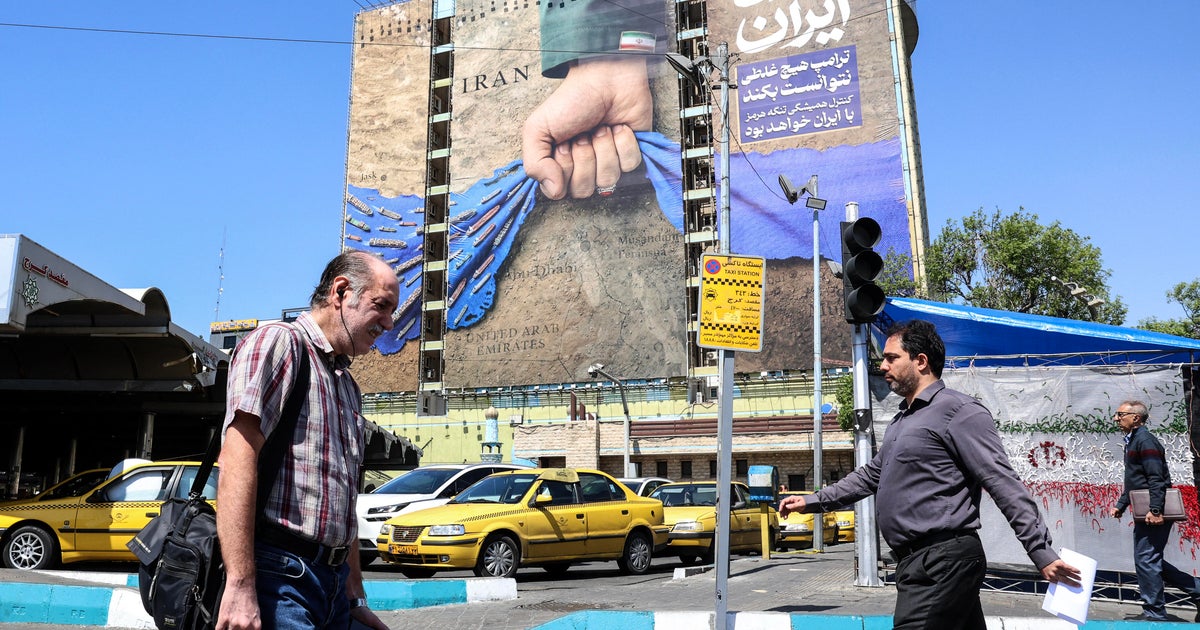
An Iranian military official has threatened to freeze trade in the region if the US does not lift its military embargo, underscoring the tensions over the talks.
The US blockade of Iranian ports and renewed Iranian threats have jeopardized the week-long agreement, but regional officials said on Wednesday that progress was being made, telling the Associated Press that the United States and Iran had offered a “baseline agreement” to extend it to allow more communications.
The commander of the joint military command in Iran warned on Wednesday that Iran will completely block shipping and exports in the Persian Gulf region, the Sea of Oman, and the Red Sea if the US military does not lift its blockade of Iranian ports.
“Iran will work hard to protect its national sovereignty and interests,” Ali Abdollahi said, calling the blockade “a prelude to violating the ceasefire.” His comments were reported by Iran’s state media.
Before the two-week ceasefire expires on April 22, negotiators are looking to agree on three sticking points that stalled direct talks last weekend – Iran’s nuclear program, the Strait of Hormuz and compensation for wartime damages – according to one of the regional officials involved in the mediation efforts.
Both officials spoke on condition of anonymity to discuss the matter.
World leaders including US President Donald Trump and UN Secretary-General António Guterres said on Tuesday that renewed talks are likely in the coming days.
The war has killed at least 3,000 people in Iran, more than 2,100 in Lebanon, 23 in Israel and more than a dozen in the Gulf Arab countries. Thirteen US service members were also killed.

The war, now in its seventh week, has rattled markets and shaken the global economy as shipping has been grounded and airstrikes have torn apart military and civilian infrastructure across the region. Oil prices fell on hopes of an end to the fighting on Wednesday, while US stocks were close to record highs set in January.
But whether the fragile ceasefire will hold appears uncertain as the US pushes ahead with its embargo, which threatens to cut off Iran from the economic channels it has relied on since the war began nearly seven weeks ago.

Get daily world news
Get daily Canadian news delivered to your inbox so you never miss the top stories of the day.
“I think they want to make a deal so bad,” Trump said in an interview with Fox Business Network’s “Mornings with Maria” scheduled to air Wednesday morning. He added: “I consider it very close to the end.”
A US official said on Tuesday that new talks with Iran are still being discussed and nothing is planned. The official spoke and asked not to be identified because they are not authorized to discuss sensitive matters.
Muhammad Aurangzeb, Pakistan’s finance minister, told the Associated Press that “our leadership is not giving up” on efforts to help the US and Iran end the conflict.
Trump on Wednesday said that China has agreed that it will not supply weapons to Iran as reports have spread that Beijing is considering an arms transfer.
Trump wrote on social media that China is “very happy that I am opening the Strait of Hormuz forever.” He added: “They have agreed that they will not send weapons to Iran.” He seemed to be suggesting that the two be connected.
China has long supported Iran’s ballistic missile program and supports it with dual-use factories that can be used to produce missiles, according to the US government.

The US Central Command said on Tuesday that no ships had passed the blockade in the first 24 hours, and that six merchant ships were complying with the directive of the US military to turn around and enter Iranian waters.
The embargo is aimed at pressuring Iran, which has exported millions of barrels of oil, mainly to Asia, since the war began in Feb. 28. Much of it has probably been borne by so-called black traffic that evades sanctions and oversight, providing the money that has been crucial to keeping Iran running.
Carts approaching the road on Monday were turned around shortly after work began, although one reversed and went over the waterway.
Since the start of the war, Iran has reduced maritime traffic, with many commercial ships avoiding the waterway. Tehran’s successful closure of the strait, through which a fifth of the world’s oil is transported in peacetime, has driven up oil prices, raising the cost of fuel, food and other basic goods far across the Middle East.

Strikes continue in Lebanon
Meanwhile, Israel continued its air and ground war in Lebanon. The country’s National News Agency reported airstrikes and artillery fire across southern Lebanon on Wednesday, including near Bint Jbeil, where Israeli forces have surrounded fighters with the Lebanese terrorist group Hezbollah.
Fighting continued after Israeli and Lebanese officials concluded their first direct talks in decades. Israeli Ambassador Yechiel Leiter said the two countries are “on the same side of the equation” in “liberating Lebanon” from Hezbollah. Lebanese Ambassador Nada Hamadeh Moawad called Tuesday’s meeting “constructive” but called for an end to the fighting. Since March, that war has displaced more than one million people from Lebanon.
Israel and Lebanon have been at war since Israel’s founding in 1948, and Lebanon remains divided over negotiations with Israel.
© 2026 The Canadian Press