Americans are stranded as airport closures in the Middle East disrupt travel

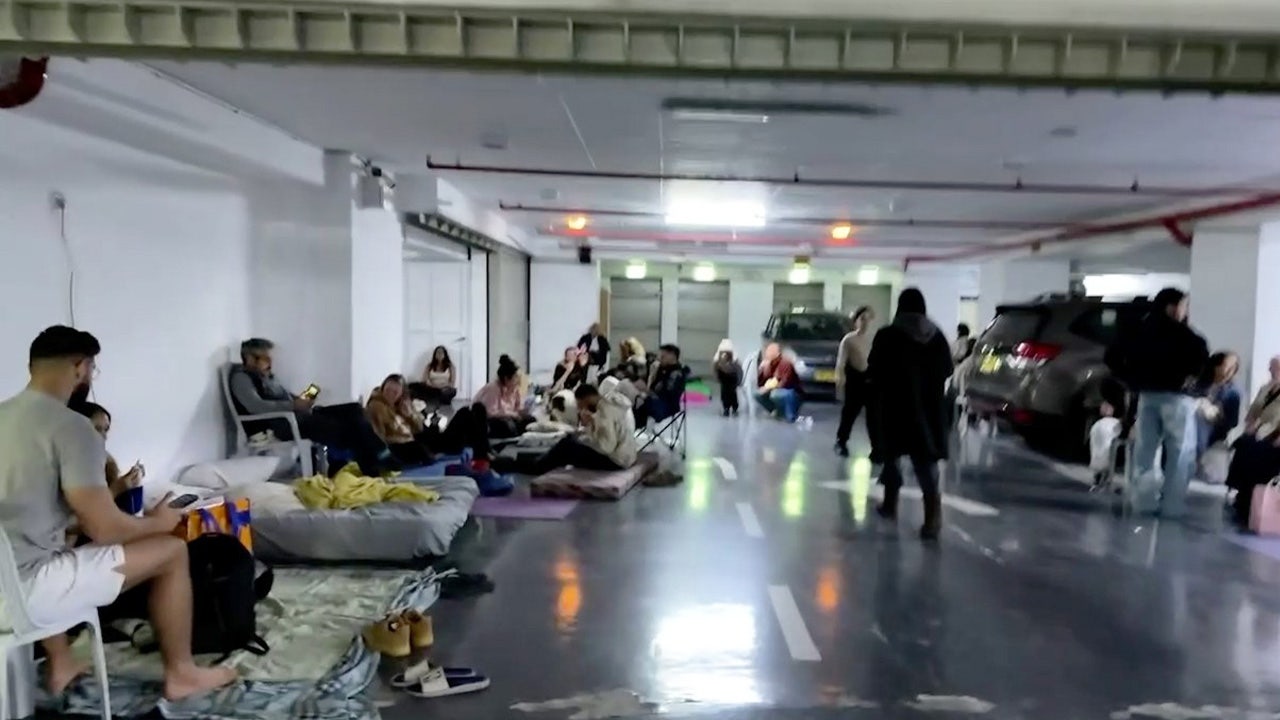
Americans are trapped in the Middle East
The US State Department is finding ways to help Americans get out of the Middle East. The department says that in the past few days, more than 9,000 Americans have returned safely from the region. Of those 9000, only 300 are from Israel.
NEWNow you can listen to Fox News articles!
Phoenix, Ariz. – The U.S. State Department is urging Americans in the Middle East to evacuate the region as soon as possible as increased conflict and airport closures hamper travel and evacuation efforts. However, attacks from Iran, closed embassies and closed airspace have created difficulties for Americans who find themselves stuck with few options.
Shanice Day was one of thousands of Americans who said they found themselves stranded in the Middle East after the conflict began. He and his best friend had gone to Dubai to celebrate his 30th birthday.
“We acted like the whole day in the desert,” said Day, “They started calling me their ‘habibi,’ and they let me play with the falcon.”
When the airspace is closed, only a limited number of flights begin to fly in the region as safety allows.
STATE DEPARTMENT USES PATRIOT BIBLE TO REMOVE AMERICANS FROM MIDDLE EAST
Shanice Day was one of thousands of Americans who found themselves stranded in the Middle East after the conflict with Iran began. When the airspace was closed, only a select number of aircraft began to leave the region as safety permitted. (Courtesy of Shanice Day)
Day had a few days off, before the US and Israel attacked Iran on February 28. Although the airstrikes began that Saturday morning, Day did not realize there was a problem until that afternoon. By the time Suku saw what had happened, Iran was already sending missiles towards the Gulf.
“When I turn on my phone, it says ‘US, Israel is attacking Iran.’ So, I told my friend that he is back from the hotel, and is currently at the beach. So, I’m basically like, ‘Hey, have you seen what happened?” Day recounts, “He explains that he feels like an arrow, almost cutting through the sky.”
Iran responded to the American and Israeli attacks almost immediately, raining missiles and drones on the United Arab Emirates, and even hit Dubai airport, one of the busiest in the world. With their return flights canceled as the UAE closes its airport, Day and his friend scramble to find a way home while trying to process the gravity of the situation.
“We just cried. These first 48 hours are very difficult for us. I had to tell our parents the news, because it was very early here. To hear my friend’s mother upset, and then to hear my mother’s voice explode like that. I would not wish this on anyone,” said Day.
AMERICANS IN DUBAI FACE AGAIN FLIGHT CANCELING AMID IRAN ISSUES
Emirati airspace will continue to open occasionally for limited flights, but all rebooked flights will eventually be cancelled. Day and his friend eventually arrived home in Houston, Texas, first flying to Australia.
Unlike the UAE, which has long characterized itself as a safe haven for foreigners, traveling to Israel has always brought the potential for conflict.
Jenna Fonberg and Jetlyn Toledo arrive at Ben Gurion Airport the day before Israel and the US strike Iran. Friends had planned to celebrate the Jewish holiday of Purim with Fonberg’s older brother, Blake, who lives in Tel Aviv.
By the time Fonberg and Toledo arrived in Israel, there had been discussions about the conflict that had erupted in the region.
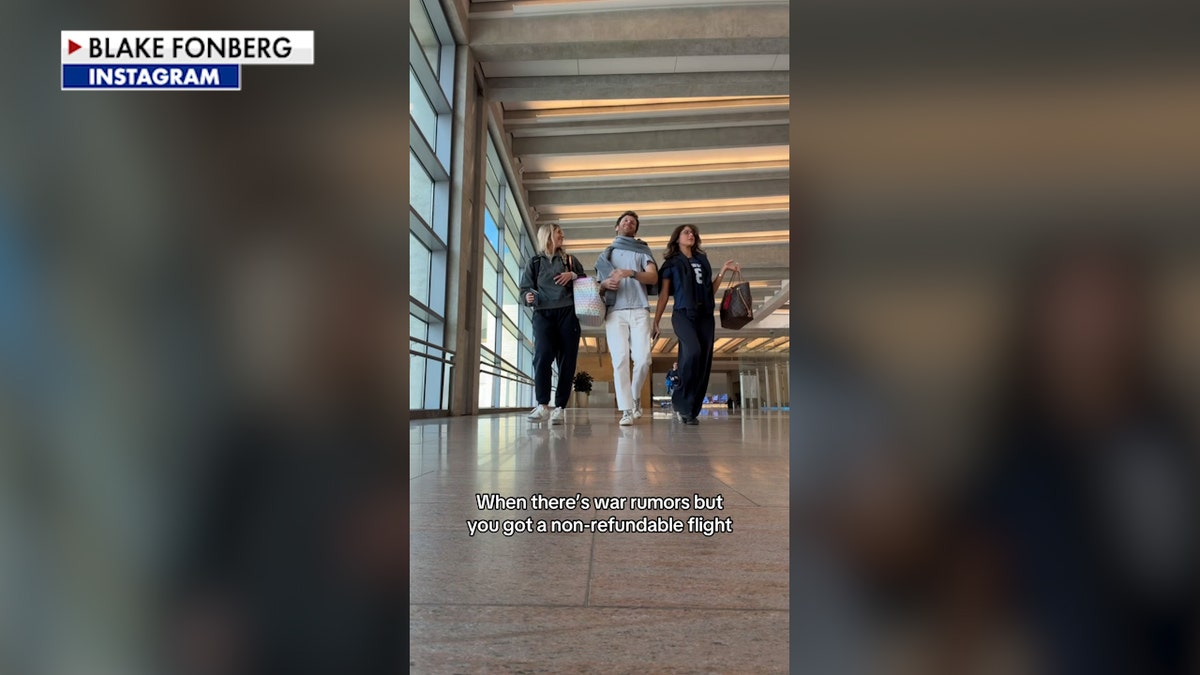
Jenna Fonberg and Jetlyn Toledo arrived in Israel on the eve of the US campaign against Iran. With the threat of attacks always present in the country, Toledo and Fonberg say they don’t want to live in fear. (Courtesy of Blake Fonberg)
“The thing about Israel is there’s always talk of war or there’s always talk of conflict. So, if you cancel every trip based on, I think, rumors of future violence, you won’t get there,” Toledo said.
The next day, the three woke up crying to get to the nearest bomb shelter. They said, overtime, they made friends with familiar faces that were often seen at the same shelters.
“There are a lot of new faces today, because it’s near the sea, so a lot of pedestrians are running here,” said Fonberg while defending during the missile threat.
Blake said he lost his home in a strike during the 12-day conflict with Iran in 2025. He said this time, he is focusing on staying positive.
“We have to always have hope. When we have hope, we lose. And, I think I tried to instill that in them. [Fonberg and Toledo] the first day. I was like, ‘Everything’s going to be fine,'” Blake said.
Through all the sirens and strikes, the three said they had faith that the US and Israeli forces would keep them safe. They said it is very important to be calm in everything.
Fonberg and Toledo looked for ways to get out of the country, but with Israel’s airspace closed at the beginning of the conflict, they were left with few options. Instead of driving to another country with open airspace, they chose to wait to see if the skies would clear during their scheduled flight on March 8.
STATE DEPARTMENT DEFENDS ‘PROGRESSIVE’ EFFORTS TO GET OUT AMID DEMS’ GOALS OF NATIONAL CONNECTION.
“I feel safe being in a bomb shelter and I can run if I need to. Rather than driving 3 hours, 5 hours to Jordan or Egypt and just cover my head when I hear a siren,” said Fonberg.
Israeli airspace began to gradually open on March 4. Fonberg and Toledo returned to the US on their originally scheduled flights.
Ben Suster and his wife were at the end of their honeymoon in Israel when the US and Israel attacked Iran. Like Fonberg and Toledo, the newlyweds knew there could be controversy but felt safe in Israel. Suster and his wife arrived in the country days before the strikes began.
“Our flight was Saturday night. We woke up Saturday morning, and we had a moment of silence, and we thought, ‘Oh my God,’ since we’ve been up all night, like we’re in the clear and our flights should be good tonight,” Suster said.
The first sirens started shortly after.
Outside of the bomb shelter inside their Airbnb, the couple made a home in a nearby public shelter.
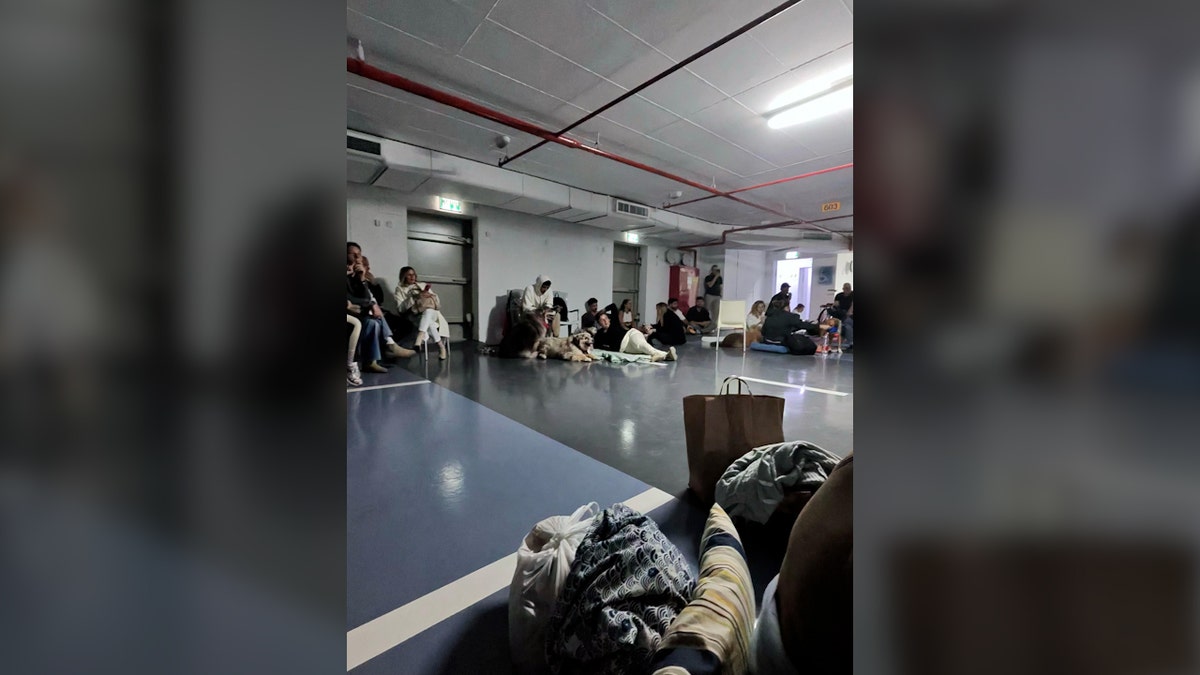
Ben Suster and his wife spent days living in a bomb shelter in Tel Aviv before moving to a family home with a shelter. (Found by Ben Suster)
“Obviously, living in a dark garage was not the way we expected to end the honeymoon,” said Suster.
They stayed in the garage full time, before meeting up with friends at another shelter.
“We spent all day and night in this garage, making friends, you know, Israelis taking advantage of this situation,” Suster said.
A few days later, Suster and his wife left Tel Aviv to join their family in Geva Binyamin, an Israeli settlement in the West Bank near Jerusalem. The couple ended up with the non-profit organization Gray Bull Rescue. For security reasons, Suster could not share details about the operation.
“We don’t even know what the future will be like. We were told what the final destination will be like, but when that happens, how we will get there, it doesn’t matter,” said Suster.
Like Fonberg and Toledo, Suster said he feels safe and is reluctant to leave. He left just because they were traveling for time, arriving home in Florida during his sister’s wedding.
CLICK HERE FOR THE FOX NEWS PROGRAM
According to the State Department, more than 32,000 Americans have returned to the United States since the US strikes on Iran began on February 28.